Services
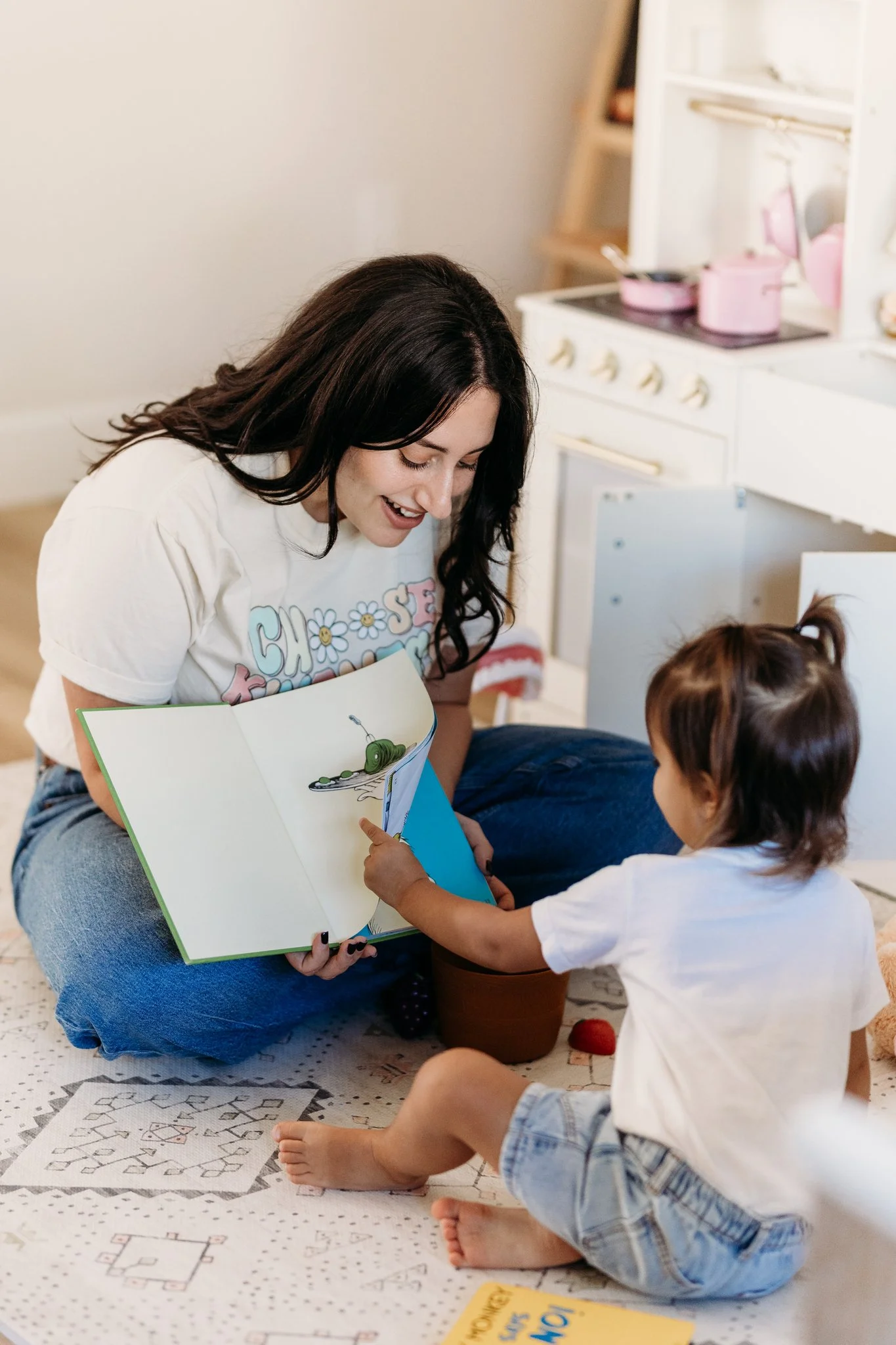
Services range from 30-45 minutes. This allows us to work intensively on specific goals without the fatigue that often sets in during longer sessions, ensuring every minute is productive.

-
Early Intervention speech therapy provides tailored, compassionate support for infants and toddlers (ages 0–3) who are navigating early communication challenges. Using a child-led and strength-based approach, I meet your child where they are, honoring their natural interests. Instead of traditional clinic routines, therapy happens directly within your child’s natural environment, using play-based interactions to nurture the foundational skills needed for first words and meaningful connection.
As a vendor with Tri-Counties Regional Center (TCRC), these services are often funded directly by the Early Start program, allowing eligible families to receive complete care at no out-of-pocket cost.
For more information visit https://www.tri-counties.org/
For developmental norms visit https://www.asha.org/public/developmental-milestones/communication-milestones/
-
Speech targets the physical production of sounds, which includes articulation distortions, phonological patterns, and apraxia of speech.
For pediatric populations, targeting speech often involves improving pronunciation and increasing intelligibility.
For adult populations, speech frequently focuses on maintaining or strengthening voice projection and clarity (e.g., due to vocal cord changes or neurological conditions like Parkinson's disease), or improving articulation following events like stroke.
-
Language involves the rules and symbols used to communicate meaning, encompassing both receptive language (understanding what is heard or read) and expressive language (using words, grammar, and social rules to share thoughts).
For pediatric populations, therapy targets acquiring vocabulary, using correct sentence structure, and developing social communication skills.
For adult populations, intervention often addresses cognitive-communication deficits (e.g., memory, attention, executive functioning) and acquired language disorders like aphasia.
-
If you feel your child’s school speech evaluation didn’t capture the full picture of their communication strengths and needs, you have the right to request an Independent Educational Evaluation (IEE). An IEE is a comprehensive, unbiased speech and language assessment conducted by an outside clinician. When requested and agreed upon through the special education process, this comprehensive evaluation is provided at no cost to your family, as the public school district covers the full expense. If you are considering a second opinion for your child, please contact me today to discuss how I can support your family.
For more information visit https://www.vcselpa.org/For-Families/Parent-Resources-Booklets